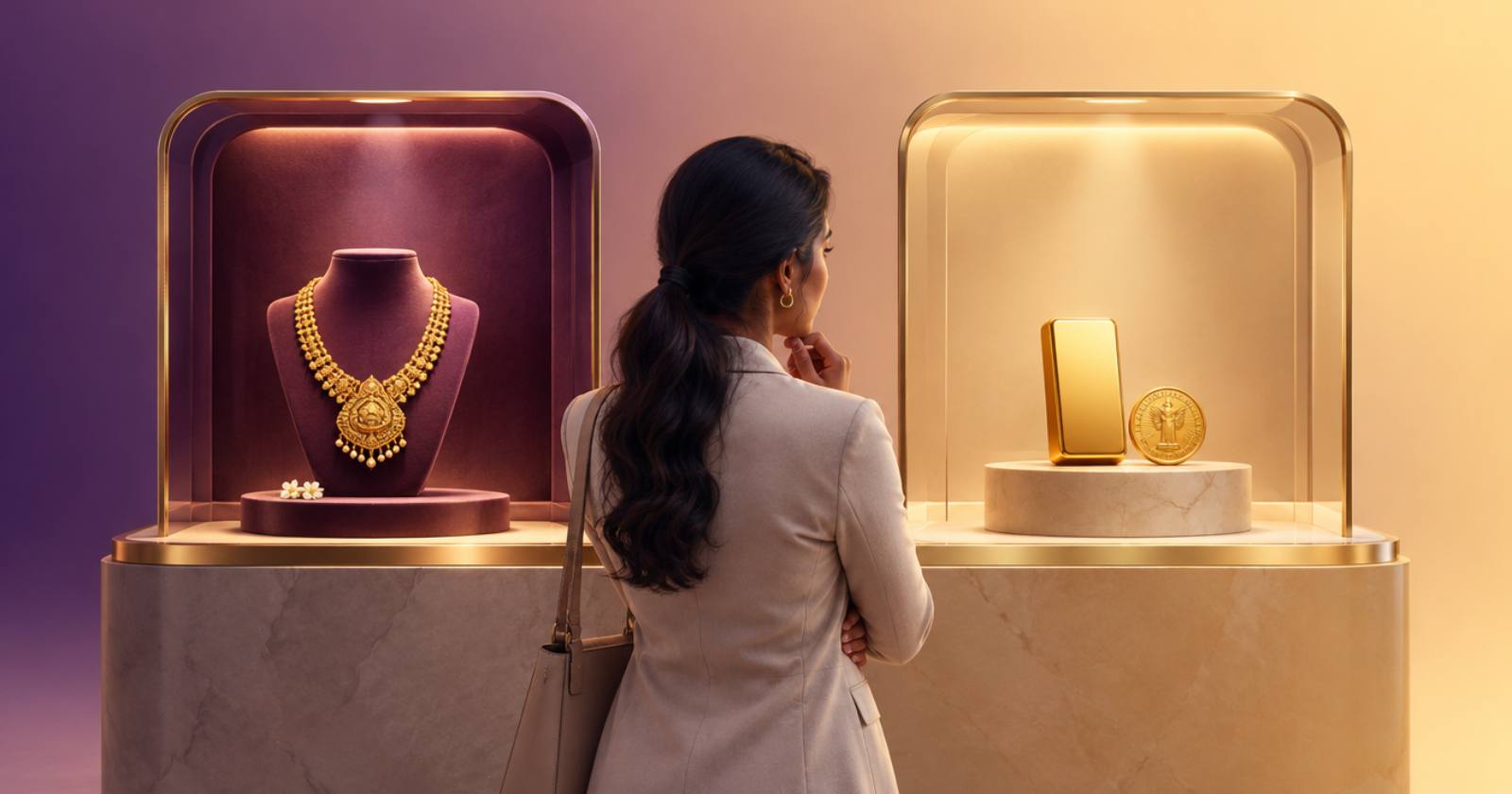




On May 10, 2026, Prime Minister Narendra Modi made a rare appeal that immediately grabbed national attention. Standing at a public event in Hyderabad, he asked Indians to stop buying gold, at least for a year.
The appeal was part of a seven-point advisory aimed at protecting India’s foreign exchange reserves at a time when global pressures are intensifying. Rising crude oil prices linked to the US-Iran conflict, increasing import bills, pressure on the rupee, and growing strain on the country’s external finances have all added to the concern. His words were direct: "We have to save foreign exchange by any means."
For a country like India, gold is not just an investment. It is deeply tied to culture, tradition, and emotion, bought during milestones like births and weddings, as well as festivals such as Dhanteras and Akshaya Tritiya, before being passed down as generational wealth.
That is exactly why the statement stopped people mid-scroll and sparked a rare moment of reflection around gold and the economy.
So the obvious question for millions of Indian households became: What do we do now? This is exactly why we are here - to help you understand how you can make money from your gold.
The Part of the Conversation Nobody's Having
Most of the debate after the PM's speech centred on one question: is it the right time to buy gold? But that's the wrong question for most Indian families.
The more important question is: what about the gold you already own?
India's households are sitting on an estimated 35,000 tonnes of gold. That value is real. Jewellery from three generations ago, gold coins bought every Dhanteras, gifts from relatives, all of it rests in lockers across the country, doing absolutely nothing.
The PM's concern is about new gold imports flooding into India and draining dollar reserves, which is fair enough as India's gold import bill hit $72 billion in FY 2025-26, making it the second largest import after crude oil.
But what about the already ~35,000 tonnes present in our own country? That conversation hasn't even started. myGold is starting that conversation. Here’s the uncomfortable truth: most Indians are excellent at acquiring gold and putting it in lockers, they don’t know how to make it work.
You May Also Like: Gold Investment in India 2026: The Smart Indian's Guide to Building Wealth with Gold
If Money Can Grow Money, Why Can’t Gold Do the Same?
There's a reason you listen to people saying money makes money. The principle is simple: Idle capital is wasted capital. A rupee sitting under a mattress is not an investment. Gold in a locker works the same way. Yes, its value may rise over time as gold prices increase, but that growth is entirely dependent on the market dynamics. The gold itself is not doing anything productive while it sits locked away. It is preserving value, not creating new value.
That’s the difference between an asset that simply appreciates and one that also generates returns. But if that same gold can be used in a way that earns interest, it starts working like capital instead of just stored wealth.
Consider how most of you think about property. Nobody buys a flat and lets it sit vacant forever. You rent it out. The flat gains value over the years and generates monthly rental income simultaneously. Two engines, one asset.
Your gold can work the exact same way, only if you let it. The concept is called gold leasing, and for the vast majority of Indian households, it's completely new territory.
What Gold Leasing Actually Means?
Gold leasing is not a loan. You don't borrow against your gold. You don't sell it. When you lease your gold, the entire ownership stays with you.
Instead, your gold is leased to the industry that needs it for their craft, the same way a tenant uses your flat while you remain the owner. In return, you earn rental income. The difference is that in gold leasing, the rental is paid in gold weight, not rupees.
Why does that matter? Because, as gold prices rise and historically, Indian gold prices have appreciated at around 11% per annum over the long term, that extra gold weight you've earned is also worth more. So you get price appreciation on your original gold and your rental gold compounds in value alongside it.
That's the double engine. So, gold leasing is a safe gold investment, and it's the answer to what your idle gold should be doing right now.
Read More About Gold Leasing: What Is Gold Leasing?
Built Around Trust, Transparency, and Ownership
When it comes to gold, returns alone are never enough. What matters equally is whether the system protecting that gold is legally secure, transparent, and build to keep ownership fully in the customer’s hands. That is precisely how myGold has structured its gold leasing ecosystem.
Every gold deposit is immediately backed by a legal bailment agreement issued on stamp paper under Section 148 of the Indian Contract Act, creating a clearly documented legal framework from day one. Throughout the journey, every milligram of customer gold remains 100% insured within the ecosystem.

Customers also retain complete legal ownership of their gold at all times. The gold is never transferred or sold, ensuring that legal title always remains with the customer while the asset continues working in the background.
To maintain complete transparency, customers receive 24×7 app access where they can track their gold value, monitor growth in weight in real time, and initiate withdrawals whenever they choose, with no dependency on manual processes or restricted access windows.
How myGold Is Turning Idle Gold Into an Earning Asset?
If the Prime Minister's appeal highlighted one thing clearly, it is that India may need to rethink not just how much gold it buys, but how it uses the gold it already owns.
And this is exactly where myGold is trying to change the conversation by giving users smarter gold advice on how to make their existing gold financially productive instead of letting it sit idle for years.
Here's how it works in simple terms:
You lease your idle gold through the platform.
The gold is provided to the industry for use.
Ownership of the gold continues to remain with you,
In return, you earn up to 5% additional gold weight annually as lease income.
This is what makes the model fundamentally different from selling gold or taking a gold loan. Your asset remains yours, but it starts functioning like productive capital instead of dormant wealth.
For most Indians, the concern has never been whether gold can create long-term value. The bigger question is whether the system managing that gold is trustworthy, transparent, and secure enough. Keeping this at the core, myGold has built its ecosystem around standardised assaying and evaluation processes, a legally compliant framework, transparent tracking with 24x7 access, and a 100% insured ecosystem designed to give customers greater confidence and peace of mind.
And that’s how we build transparency and trust.
Conclusion
For decades, Indians have viewed gold primarily as security, something to buy, preserve, and pass on. However, economies evolve and so do the financial systems, which is why the gold ownership ecosystem is evolving too.
The real conversation today is no longer just about whether it is safe to invest in gold now; the bigger question is whether the gold already sitting in your home should remain idle when it has the potential to generate additional value. If existing household gold can become financially productive, it also means the same gold continues circulating within India’s economy instead of increasing dependence on fresh imports from abroad.
This directly supports the Prime Minister’s larger appeal: reducing pressure on foreign exchange reserves without disconnecting Indians from gold itself.
In the years ahead, the future will belong to people who don’t just own gold, but know how to make it work quietly in the background, even in their sleep.
If you’d like to understand how gold leasing works in practice, you can reach out to us and we will be more than happy to explain the process in detail.